






A step
change
for health
access
A step change
for health
access
to manage healthcare demand before hospital access.
Making healthcare systems sustainable.
VHOS
was not designed
in a laboratory
It emerged from real clinical experience and research conducted over several years in hospital settings. Before the creation of the VHOS platform, several research and clinical initiatives contributed to shaping the conceptual framework of the virtual hospital model and AI-supported care organization. These experiences form the scientific foundation on which VHOS has been developed.
ARTICA
Research project dedicated to developing AI models for chest pain evaluation and risk stratification.
RICOVAI-19
AI-based home monitoring system used during the COVID-19 pandemic to support patient follow-up in the Marche Region.
CANFIB
Study dedicated to developing AI-based predictive models for the early identification of atrial fibrillation risk in women. Supported by the VHOS ecosystem.
VHOS
AI-Native virtual hospital platform.
VHOS represents
the next step
Transforming clinical experience and research into a scalable
AI-Native hospital model.
VALUE PROPOSITION
Organising
healthcare demand
before
hospital access.
Supporting
clinical
decisions
with artificial intelligence.
Organising healthcare demand before hospital access. Supporting clinical decisions with artificial intelligence.
VHOS is designed to support new AI-enabled virtual hospital models. By integrating digital patient interaction, clinical data analysis and medical oversight, VHOS enables healthcare demand to be organized before hospital access and improves the efficiency of healthcare systems. VHOS-ai is not telemedicine.
Model
AI Virtua
Hospital
Digital triage and clinical prioritisation before hospital access.
Architecture
Government
Clinical
Impact
Healthcare
System Scalability
Designed for regions, hospitals and large healthcare systems.
Rethinking
access
to care
Rethinking access to care
VHOS is an AI-powered virtual hospital ecosystem designed to reorganise healthcare demand before patients reach physical hospitals. Through digital triage, risk stratification and remote monitoring, VHOS helps healthcare systems improve operational efficiency, clinical appropriateness and continuity of care.
Demand management and clinical prioritization.
VHOS integrates an
AI-Native platform designed to
enable
new virtual hospital models.
Digital patient interaction, clinical data analysis and medical supervision allow the platform to organise healthcare demand before hospital access and support more efficient clinical decision-making.
AIRCARE
clinical model
AIRCARE – Artificial Intelligence Roaming Healthcare – is the clinical care model implemented on the VHOS platform. Through risk stratification algorithms, digital triage and AI-supported decision tools, AIRCARE enables healthcare pathways to be organized before hospital access while maintaining continuous medical oversight.
VHOS integrates AI modules designed to operate within a virtual hospital.
Three core modules constitute the operational architecture of the platform
and operate within the virtual hospital model.
Medical
AI Avatar
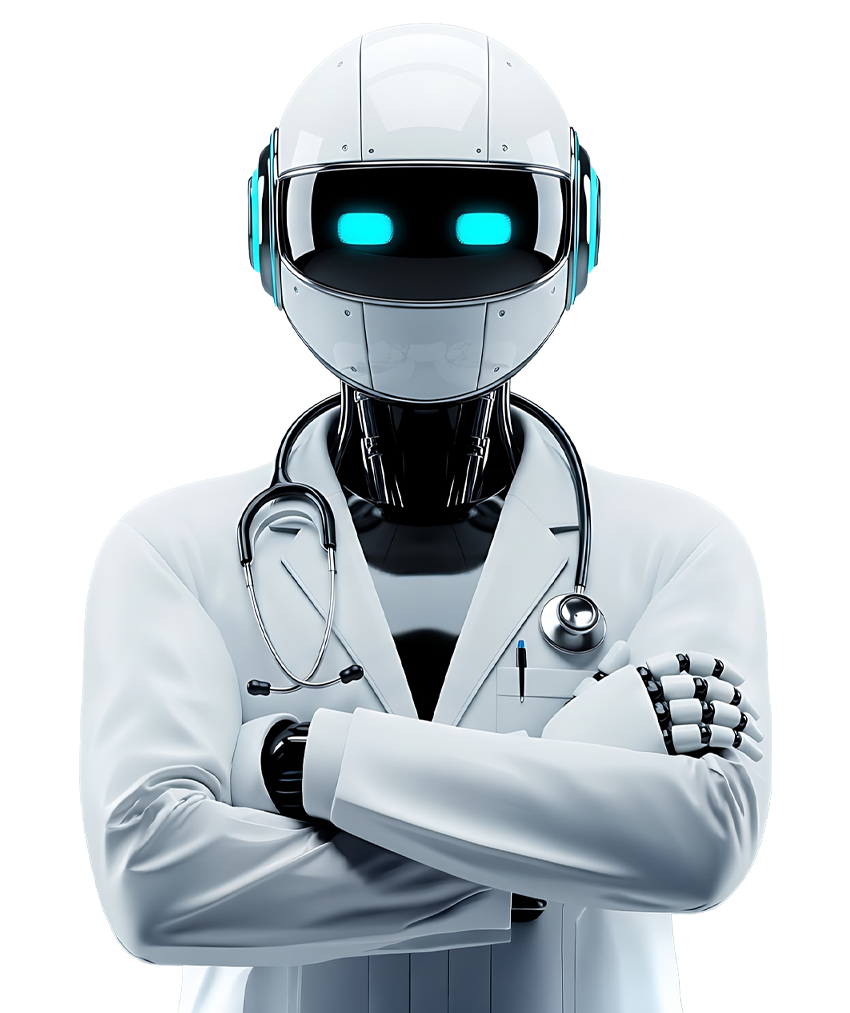
A humanoid medical AI avatar that interacts with patients, collects structured clinical information and supports digital triage under physician supervision.
Remote Vital
Signs Monitoring
An AI-based remote monitoring module extracting physiological parameters from facial video signals, enabling contactless assessment and longitudinal monitoring.
Remote CPAP
Therapy Management
AI module for the safe management and remote monitoring of home CPAP therapy, with adaptation of PEEP and respiratory parameters under clinical supervision.
>
Integration Statement
Each module can be deployed independently or integrated into the VHOS virtual hospital ecosystem depending on the clinical and organisational needs of healthcare systems.
>
Regulatory Safe Line
All modules are designed according to principles of clinical governance, data protection and regulatory compliance. Medical device classification pathways under the European MDR framework are under evaluation where applicable.
Doctors stay in control.
AI handles scale.
1
Patient at Home
Patients interact from home with AI-powered digital tools, reporting symptoms and clinical information through structured digital interfaces. This interaction enables the generation of organized clinical data, supporting initial assessment and longitudinal monitoring over time.
Physician-AI Interaction
Artificial intelligence collects, organizes, and pre-processes clinical information provided by the patient, integrating symptoms, medical history, and data from digital devices. This process supports digital triage and facilitates a preliminary case evaluation. Clinicians can quickly access a structured clinical overview to inform their decision-making.
2
3
Risk Stratification
AI models analyze clinical and contextual data to stratify patients according to their risk profile, helping identify cases that require closer attention or more timely intervention.
Clinical Prioritization
The platform provides clinicians with actionable insights to support patient management. Information is presented in a structured way to facilitate the definition of care priorities. The system supports the organization of access to services and care pathways, while final decision-making responsibility always remains with the physician.
4
5
Physician oversight
Clinicians receive AI-generated insights in a structured and operational format. They maintain full decision-making authority, validate clinical priorities, and intervene when needed along the care pathway. Physicians remain at the centre of care, while artificial intelligence supports data analysis and system scalability.
Operational model
Three Micro-Steps
1. Engage
Patients interact with AI tools at home, generating structured and clinically meaningful data.
2. Analyse
AI models stratify risk, assess appropriateness, and prioritise care pathways using explainable algorithms.
3. Act
Clinicians receive actionable insights, maintain full oversight, and intervene where and when needed.
Primary care virtual triage
Waiting list management
Chronic disease follow-up
Cardiovascular prevention
Post-discharge monitoring
Clinical standards, safety, and compliance at the core of a digital healthcare ecosystem.
All modules are designed according to principles of clinical governance, data protection, and regulatory compliance. Medical device classification pathways are under evaluation where applicable.
Human-in-the-loop governance
Algorithms are designed according to Explainable AI principles, allowing clinicians to understand the factors contributing to system outputs.
Explainable
AI
Algorithms are designed according to Explainable AI principles, allowing clinicians to understand the factors contributing to system outputs.
GDPR
compliant
The platform is designed according to data protection and security principles, in compliance with the European GDPR framework
MDR pathway
in progress
VHOS-ai modules are being evaluated for potential medical device classification under the European MDR framework, where applicable.
Collaborating across
the healthcare ecosystem
Hospitals and centres of excellence
Azienda Ospedaliero-Universitaria delle Marche / CANFib National and international research initiatives in cardiology and digital health.
Industry partners
We collaborate with national and international technology partners to develop, validate, and scale innovative AI-based healthcare models.
Clinical expertise
meets data science
Cardiologist with international experience in AI-driven healthcare and digital medicine. VHOS-ai is led by a clinician-founder and supported by a multidisciplinary team combining clinical expertise, digital operations, and external AI development partners, operating under a strong clinical governance framework.

Marco Mazzanti, MD, FESC, FAHA
Co-Founder & CEO | CMO
Mathematician and data scientist with extensive experience in machine learning models and AI architectures applied to complex systems. At VHOS-ai he leads the development of analytical models and algorithms for risk stratification and decision support, integrating clinical data, natural language and causal approaches.

Maurizio Sanarico
Co-Founder & Chief Data Scientist
Contattaci
Vuoi approfondire il progetto?
Compila il modulo per ricevere maggiori informazioni e scoprire come è stato sviluppato il progetto.
-
ANCONA, 60123 Terenzio Frediani, 8 ITALIA